
Low-profile locking
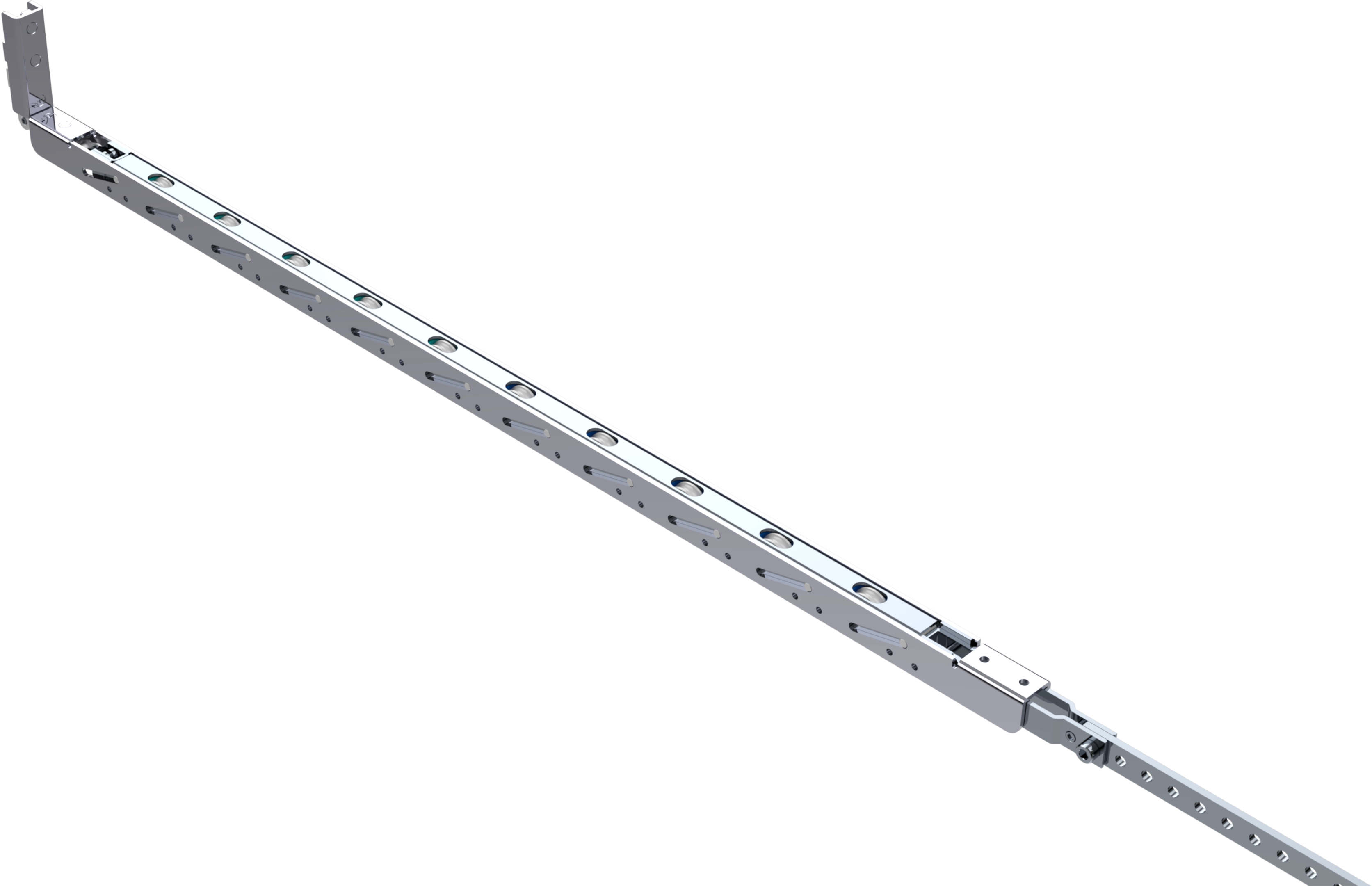
Slim hookbolt hardware is designed around the same compact system groove as the roller, reducing the pressure on profile design.
MOR Lift & Slide packages the self-levelling MOR principle into an exceptionally low lift-and-slide roller with a 21.5 mm dropped height.

A lift-and-slide system has to raise, lower, seal and move the panel. Roller height affects the profile, threshold, glazing space and locking hardware. This MOR architecture was developed around that complete system context rather than adapted as an afterthought.
The low package frees profile space for slimmer framing, thermal improvement and greater design flexibility.
The pressure-based architecture is designed so every useful wheel carries an equal share instead of relying on outer bogeys.
Five-wheel rollers form the 250 kg direction; ten-wheel rollers form the 500 kg direction, subject to approved system configuration.
The useful comparison is not height in isolation. It is whether the roller can fit the lift architecture, share the panel load and deliver the required movement within the available profile.
Traditional lift-and-slide bogeys can concentrate weight toward the outer wheel groups. MOR's pressure-based self-levelling approach is designed to keep the useful wheels participating, which supports low height without accepting a poor operating-force trade-off.
The public detail stays intentionally focused on selection outcomes. CiiLOCK can review the roller, locking and profile interface together when a project moves into specification.
Slim hookbolt hardware is designed around the same compact system groove as the roller, reducing the pressure on profile design.
A base drive unit and extension approach can support additional hook positions along taller panels while retaining compatibility with a standard lift-and-slide handle and 10 mm spindle.
The 21.5 mm roller height allows profile designers to move beyond common 30 mm and 42 mm assumptions and pursue thermal, aesthetic or glazing priorities.
True self-levelling and load sharing across the roller.
More useful wheels for a substantially heavier panel.
Published masses describe system directions shown in the supplied technical material. Final panel rating, operating force, profile support, track, sealing and locking configuration require CiiLOCK review.
Request the relevant catalogue and our team will follow up with the information for this technology and your market.
Request catalogue ↗